
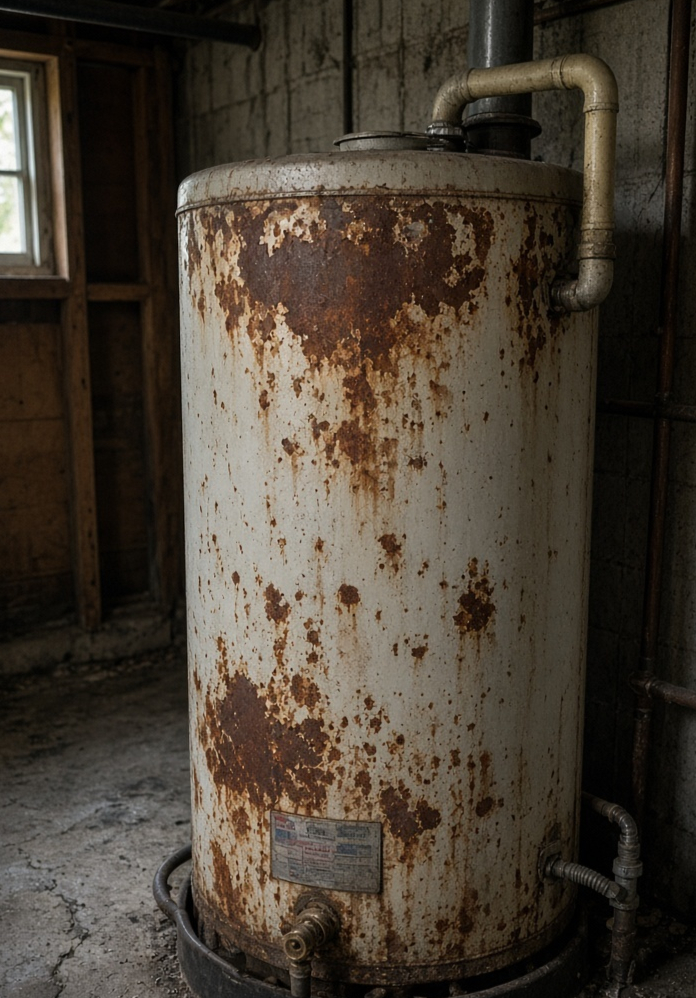
A failing water heater doesn’t just mean a cold shower – it can lead to rising energy bills and, in some cases, safety hazards. This guide breaks down the key indicators that signal it’s time to replace your unit, tailored to Passaic County’s climate and housing styles. Whether you’re in an older bungalow or a newer family home, understanding these signs helps you make an informed call before a small issue becomes an emergency.
Signs It’s Time to Replace Your Water Heater
Water heaters typically last 8-12 years, but Passaic County’s cold winters, humid summers, and mineral-rich water can shorten that lifespan. Replacement makes sense once repairs no longer make economic or safety sense.
- Age and Rust Formation – a unit over 10 years old showing rust on the exterior or anode rod is likely nearing the end of its usable life. The anode rod protects the tank from corrosion; once it’s fully worn, the tank itself starts to degrade.
- Inconsistent Water Temperature – lukewarm or scalding water often points to a failing thermostat or heating element. For tankless units, sediment clogging the heat exchanger is a common local issue.
- Strange Noises and Leaks – rumbling sounds usually indicate sediment buildup, while dripping from the pressure relief valve signals overpressure. Either can point to compromised tank integrity.
- Discolored or Foul-Smelling Water – rusty or metallic-tasting water suggests internal corrosion. A sulfur smell in gas models can point to a bacteria issue or pilot light problem.
- Rising Energy Bills – an aging heater works harder to maintain temperature, especially during cold snaps, which shows up as unexplained increases in your utility bill.
Local factors matter too: freeze-thaw cycles can stress tanks over time, and replacements typically require permits to ensure code compliance. A diagnostic assessment can confirm which of these signs apply to your specific unit before you decide between repair and replacement.
Understanding Why Water Heaters Fail Faster in Passaic County
Several local conditions combine to shorten water heater lifespan in this region. Hard water carries a higher mineral content, which accelerates sediment buildup inside the tank and speeds up wear on internal components like heating elements and thermostats. Seasonal temperature swings – cold winters followed by humid summers – cause the metal tank to expand and contract repeatedly, which over time can weaken seams and welds. Homes with older plumbing infrastructure, particularly those built before modern insulation and venting standards, often place additional strain on water heating systems that weren’t designed for current household demand. Understanding these local factors helps explain why a unit rated for 8-12 years might need attention closer to the lower end of that range here.
Repair vs. Replace: Making the Right Call
Not every issue means it’s time for a new unit. A single failed component – like a thermostat, heating element, or pressure relief valve – on a unit under about eight years old is often a reasonable repair. Once a tank shows internal rust, has failed more than once in the past year, or is approaching the 10-12 year mark, repair costs start to approach what a full replacement would cost, and replacement typically becomes the more sensible option. Weighing the age of the unit against the frequency and cost of recent repairs is usually the clearest way to decide.
How to Assess and Prepare for Replacement
Determining whether replacement is the right call starts with checking the manufacturer’s label for age and inspecting for visible damage. Older housing stock in parts of Passaic County often has undersized or outdated systems that struggle to keep up with modern household demand.
A few practical steps:
- Flush the tank annually to reduce sediment buildup, which is especially important given the area’s mineral-rich water supply
- Check the anode rod periodically – a worn rod accelerates tank corrosion, and anode rod replacement on a regular schedule extends tank life
- Evaluate household hot water needs – a family of four typically needs a meaningfully larger tank than a single-occupant home, and tankless units can be a good fit for tighter urban spaces
- Check local permit requirements – many jurisdictions in the area require permits and safety features like seismic straps or expansion tanks for new installations
Insulating exposed pipes and the tank itself can help reduce heat loss during colder months, which eases strain on the system and may delay the need for replacement. It’s also worth testing the pressure relief valve periodically – if lifting the lever doesn’t release water, that’s a safety issue worth addressing promptly.
Getting the sizing right matters: an undersized unit cycles more often and wears out faster than one properly matched to household demand. If you’re considering a full water heater replacement, we factor in your home’s layout and water quality before making a recommendation.
Tank vs. Tankless: What to Consider When Replacing
When it’s time to replace, homeowners often reconsider whether to stick with a traditional tank or switch to a tankless system. Tank units generally cost less upfront and are simpler to install, making them a straightforward swap in most homes. Tankless units take up less space, heat water on demand rather than continuously, and can be a good fit for households with higher hot water usage – though they require adequate gas line capacity or electrical service, which is worth confirming before committing to the switch.
Common Mistakes to Avoid
Homeowners often delay action or attempt shortcuts that end up costing more in the long run. Ignoring minor leaks under the assumption they’re “normal” is a common mistake – left unaddressed, that moisture can lead to mold or structural damage over time. Other risks include scalding from a faulty thermostat or a gas leak from an unserviced pilot assembly.
Choosing the lowest-cost unit without considering efficiency is another pitfall, since a low-efficiency model can raise energy costs enough to offset any upfront savings. Skipping required permits can also create problems with warranty coverage or future home sales. And forgetting to flush the system before a new installation can introduce old sediment into a new unit, shortening its lifespan unnecessarily.
Serving Passaic County Communities
We work with homeowners throughout the area, including Wayne, Garfield, and Wood-Ridge, so we’re familiar with the housing styles and water conditions specific to each.
Frequently Asked Questions
How do I know if my water heater problem is worth repairing?
It usually comes down to age and the extent of the issue. A younger unit with one failed part is often worth repairing; an older unit with recurring problems usually isn’t.
Are there rebates available for replacing an old water heater?
Some energy-efficient models may qualify for utility or state rebate programs. Availability and amounts change, so it’s worth checking current programs directly or asking during your estimate.
How long does a water heater replacement typically take?
Most standard tank replacements are completed in a single visit. Tankless installations or units requiring updated venting may take longer.
What size water heater does my household need?
It depends on household size and hot water usage patterns. We assess this on-site rather than relying on a generic estimate, since undersizing leads to running out of hot water and oversizing wastes energy.
Get Started
If assessing your system feels overwhelming, we’re glad to help. Call now at (833) 414-4877 for a transparent estimate on inspection or replacement for your Passaic County home.
Leave a Reply