
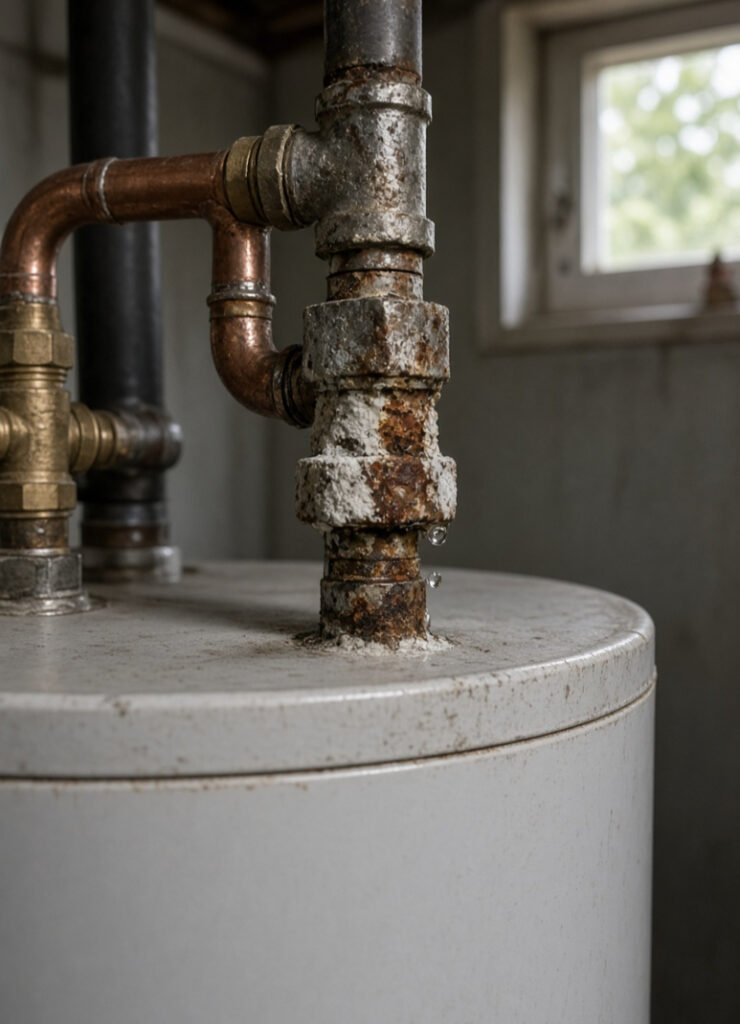
A puddle under your water heater can turn a normal day into a stressful one, especially in Passaic’s older homes where these systems have been working hard for years. Leaks are a common issue that can lead to water damage, higher utility bills, and safety concerns if ignored. This guide breaks down the main causes of water heater leaks, practical steps to address them, and mistakes to avoid.
Understanding the Causes of Water Heater Leaks
Water heaters provide hot water for showers, laundry, and dishes day in and day out, and when they start leaking, it’s usually a sign of an underlying issue that built up over time. In Passaic’s climate – harsh winters and humid summers – these systems face extra strain from temperature swings and aging infrastructure common in mid-20th-century homes.
The primary causes include:
- Corrosion and Rust – the tank’s interior can rust due to sediment buildup or hard water, weakening the steel until small holes form. Regular flushing helps, but once corrosion sets in, it’s typically not reversible without replacement.
- Faulty Temperature and Pressure Relief (T&P) Valve – this safety device releases excess pressure, but a malfunctioning or clogged valve can drip constantly. A diagnostic check can confirm whether the valve itself is the source.
- Loose or Damaged Connections – pipes and fittings can loosen from vibration or thermal expansion, and older galvanized piping common in Passaic homes makes this more likely at joints.
- Cracked Tank or Dip Tube Issues – a broken dip tube causes cold water to mix inefficiently, stressing the tank over time.
- Sediment Overload – sediment settling at the base of the tank acts as an insulator, forcing the unit to work harder and increasing the risk of leaks.
How to Tell Where a Leak Is Actually Coming From
Not every puddle near a water heater means the tank itself has failed – pinpointing the source matters before deciding on a fix. Start by drying the area completely and checking back after an hour. Moisture reappearing at a fitting or pipe connection usually points to a loose or worn seal rather than the tank. Water coming from the top of the unit is more likely tied to an inlet or outlet connection, or a failing heating element on an electric model. A leak originating from the bottom of the tank itself, particularly if it’s accompanied by rust stains, generally signals internal tank failure, which typically means replacement rather than repair. Condensation can also mimic a leak, especially during humid months or right after the tank refills with cold water – this usually clears on its own and isn’t cause for concern.
Practical Tips to Prevent and Address Leaks
Preventing leaks starts with routine care suited to local conditions, including freeze-thaw cycles in winter and the prevalence of older tank-style units in the area’s housing stock.
Schedule annual maintenance: drain and flush the tank to remove sediment, which matters in Passaic given the area’s water hardness. Check the anode rod periodically, since this sacrificial component corrodes instead of the tank and needs periodic replacement to keep working. Inspect connections and tighten loose fittings carefully, and test the T&P valve by briefly lifting the lever – water should flow, then stop. If it continues dripping afterward, it likely needs replacement.
Cold snaps can also cause condensation on a tank that looks like a leak but isn’t, so insulating the unit can help clarify what you’re seeing. If your home is in a flood-prone area, elevating the heater or adding a drain pan with a float switch is worth considering.
A Simple Maintenance Schedule to Reduce Leak Risk
Staying ahead of leaks doesn’t require constant attention, just a consistent routine. Roughly once a year, flush the tank to clear out sediment before it has a chance to build up. Check the anode rod on a similar schedule, since a depleted rod is one of the more preventable causes of internal corrosion. Every few months, do a quick visual check around the base and connections for any signs of moisture, and test the T&P valve at the same time. Keeping a simple log of when these checks happen makes it easier to spot patterns, like a fitting that keeps loosening or a valve that needs more frequent attention than expected.
If You Have an Active Leak
- Turn off the water supply and the power or gas to the unit
- Place a bucket under the leak and try to identify the source – tank versus valve
- If it’s a valve issue, replacement may resolve it; a tank leak generally means it’s time to discuss a full water heater replacement or tankless installation for long-term reliability
If an electric water heater is leaking from the top, it’s worth having the heating elements checked, since failing elements can sometimes be mistaken for a leak. For gas units, any suspected leak should be treated as urgent – our gas leak detection team can assess it quickly.
Common Mistakes to Avoid
Ignoring small drips under the assumption they’re harmless is one of the most common errors – left unaddressed, they can lead to water damage like warped flooring or mold in a basement. Attempting to patch a rusted tank with sealant is another frequent mistake; it may hold briefly but tends to fail under pressure, risking a more serious burst down the line.
Skipping regular flushing allows sediment to build up, reducing efficiency and shortening the unit’s working life. And delaying professional help after noticing early warning signs – hoping the issue resolves itself – often means dealing with a bigger repair, or a full replacement, later on.
Frequently Asked Questions
Is it safe to keep using a water heater that’s leaking slightly?
A small, identified leak from a fitting may be safe to monitor briefly while arranging repair, but a leak from the tank itself should be treated as a sign the unit needs to be shut off and assessed promptly, since it can worsen without warning.
Can a leaking water heater cause a gas leak?
Not directly, but water reaching gas connections or the burner assembly on a gas unit can create a separate hazard. If you have a gas model and notice a leak, it’s worth having both checked together.
How much water damage can a water heater leak cause?
That depends on how quickly it’s caught. A slow drip over weeks can lead to gradual moisture damage, while a sudden tank failure can release the full contents of the tank in a short time, so prompt attention matters either way.
Will homeowners insurance cover water heater leak damage?
Coverage varies by policy and by the cause of the leak. It’s worth checking your specific policy or asking your provider directly, since sudden failures are often treated differently than damage from long-term neglect.
Serving Passaic and Nearby Communities
We regularly serve homes in Nutley, Elmwood Park, and Wallington, so we’re familiar with the housing styles and water conditions across the area.
Get Started
If your water heater is leaking or you’re not sure what’s causing it, we’re glad to help. Call now at (833) 414-4877 for a transparent estimate on inspection or repair for your Passaic home.
Leave a Reply