
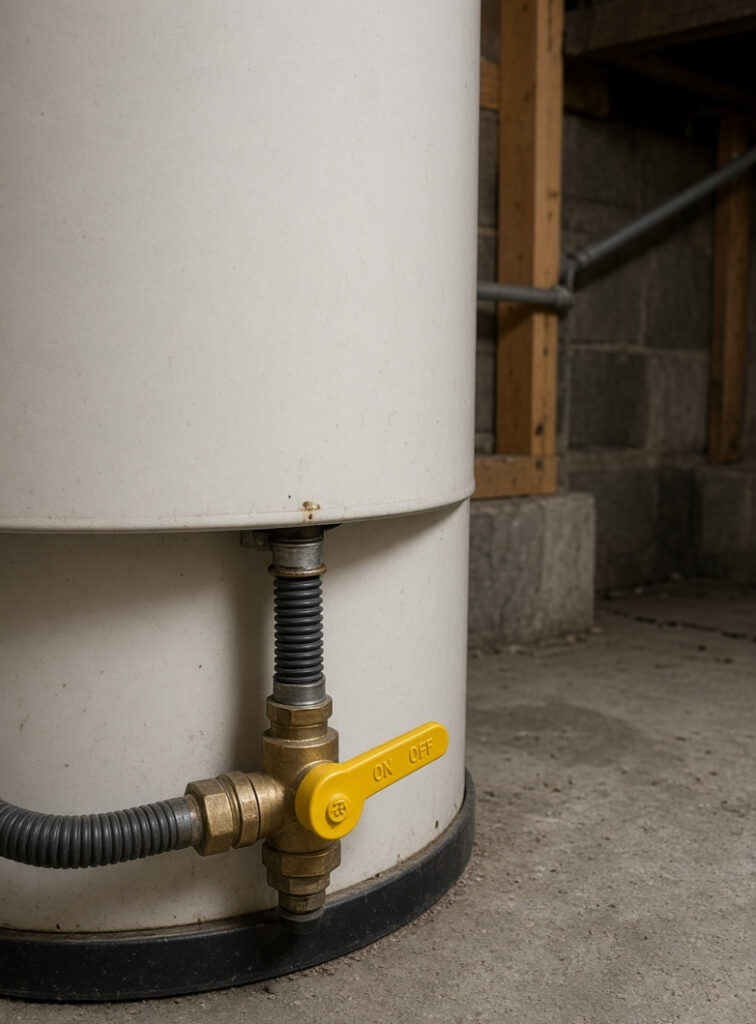
A gas water heater is generally safe and reliable, but like any gas appliance, it carries a small risk of leaks if a connection loosens, a valve fails, or venting isn’t working properly. Knowing what to watch for helps Passaic homeowners act quickly if something’s wrong, rather than dismissing early warning signs.
Why Gas Leaks Happen Near Water Heaters
Most gas leaks near a water heater trace back to a handful of common causes. Fittings and connections can loosen gradually over years of minor vibration or thermal expansion as the unit heats and cools. Flexible gas lines can develop small cracks or wear points over time, particularly in older installations. Corrosion at a valve or connector is another frequent culprit, especially in humid basement environments. Less commonly, a cracked heat exchanger or damaged burner assembly can allow gas to escape internally. Understanding these causes helps explain why routine inspection matters even when a unit seems to be functioning normally.
Common Signs of a Gas Leak
Gas leaks don’t always announce themselves clearly, which is part of what makes them dangerous. A few signs are worth taking seriously:
- A rotten-egg or sulfur smell near the water heater or surrounding area – utility companies add this scent to natural gas specifically so leaks are noticeable
- A hissing or whistling sound coming from the unit or its gas line connections
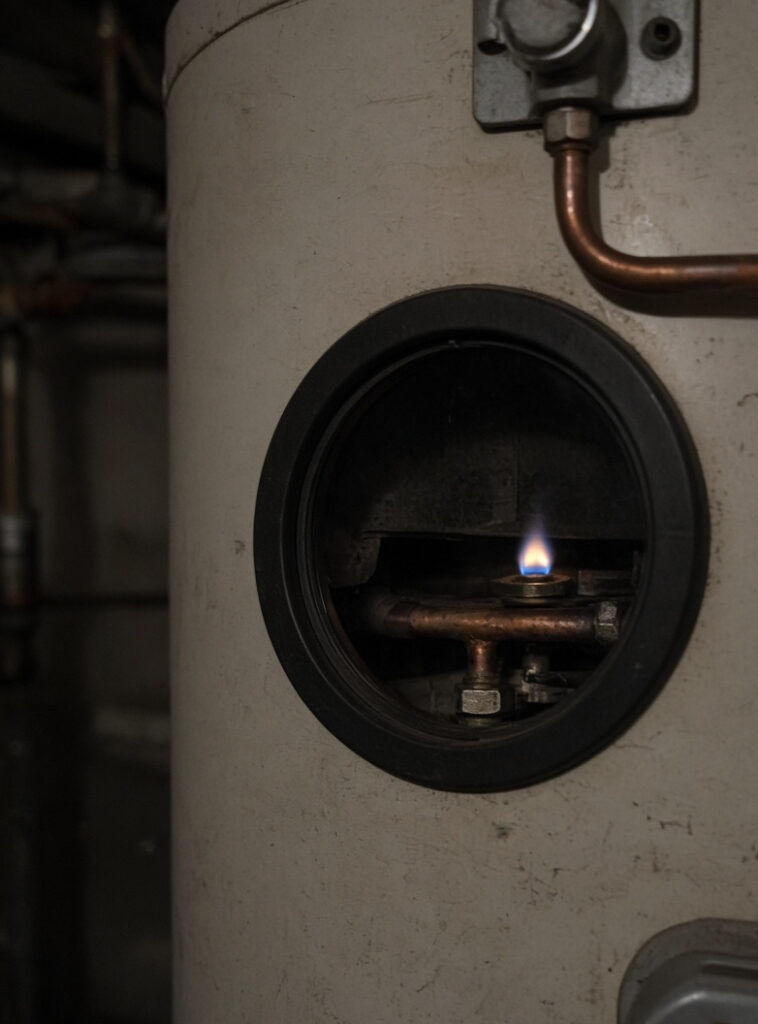
- A pilot light that won’t stay lit, or one that burns with a yellow or flickering flame instead of a steady blue one
- Visible damage or corrosion on the gas line or fittings leading to the unit
- Physical symptoms like headache, dizziness, or nausea when spending time near the appliance, which can indicate exposure
- Dead or dying houseplants near the appliance, which can sometimes indicate a slow, ongoing leak affecting air quality in that area
- Higher-than-usual gas bills without a clear explanation, which can point to gas escaping somewhere in the system rather than being used efficiently
If you notice any of these, it’s worth having the unit checked rather than waiting to see if it resolves on its own.
Gas Leak Smell vs. Other Water Heater Odors
It’s worth knowing the difference between a gas leak and other common water heater smells, since they call for different responses. A rotten-egg smell that’s strongest right at the gas connection or valve area typically points to a gas issue. A similar sulfur-like smell coming specifically from the hot water tap, rather than the air around the unit, is more often related to bacteria interacting with an anode rod inside the tank – a water quality issue rather than a gas safety issue. If you’re unsure which you’re dealing with, treating it as a possible gas concern first is the safer approach until a professional can confirm the source.
Why These Signs Shouldn’t Be Ignored
A minor gas leak can seem harmless at first, especially if the smell is faint or comes and goes. But gas leaks tend to worsen over time as fittings continue to loosen or corrode, and even a small, ongoing leak affects indoor air quality. A diagnostic assessment can identify whether what you’re noticing is actually gas-related or tied to a separate issue, like a failing anode rod producing a similar odor in the water itself.
What to Do If You Suspect a Gas Leak
- Leave the area and get everyone, including pets, out of the house
- Don’t turn light switches, appliances, or anything electrical on or off – a spark near a gas leak is a real risk
- Don’t light matches, candles, or anything else that could ignite
- Don’t attempt to locate or fix the leak yourself
- Once outside, call your gas utility’s emergency line or 911 if the smell is strong
- Once it’s safe, have a professional inspect and repair the source of the leak
What Happens During a Professional Gas Leak Inspection
A proper inspection starts with locating the source rather than guessing at a fix. This typically involves checking all visible connections and fittings for looseness or corrosion, inspecting the flexible gas line for cracks or damage, and testing the pilot light and burner assembly for proper function. If the leak isn’t immediately visible, specialized detection methods can help pinpoint smaller leaks that aren’t obvious from a visual check alone. Once the source is confirmed, the specific fitting, valve, or component can be repaired or replaced as needed.
How We Handle Gas Leak Concerns
Our gas leak detection service is built around identifying the exact source of a leak – whether it’s a loose fitting, a failing valve, or a venting issue – and addressing it directly rather than guessing. If the underlying cause turns out to be an aging unit rather than a fixable component, we’ll walk you through whether repair or a full water heater replacement makes more sense for your situation.
Reducing the Risk of Future Leaks
Routine maintenance goes a long way toward preventing gas-related issues before they start. Having connections and venting checked periodically, rather than only after a problem appears, catches small issues while they’re still minor. For households considering a change, a tankless system uses a different venting and ignition setup that some homeowners prefer for this reason, though it’s worth discussing whether it’s the right fit for your home’s gas line capacity.
A Simple Prevention Checklist
A few habits can meaningfully lower the risk of a gas-related issue going unnoticed. Do a quick visual check of visible fittings and connections every few months, looking for corrosion or obvious wear. Pay attention to the pilot light’s color and consistency when you happen to notice it. If your home doesn’t already have one, a gas detector installed near the water heater and other gas appliances adds an extra layer of monitoring between professional inspections. And keep the area around the unit clear so any developing issue, like a smell or unusual sound, is easier to notice.
Serving Passaic and Nearby Communities
We regularly serve homes in Jersey City, Union, and Downtown Paterson, so we’re familiar with the gas line conditions and housing styles across the area.
Frequently Asked Questions
Is a faint gas smell near my water heater always an emergency?
Any noticeable gas smell is worth taking seriously. If it’s strong, leave immediately and call your gas utility. If it’s faint and intermittent, it still warrants a professional check rather than waiting.
Can a gas leak happen even if my water heater seems to be working fine?
Yes — a leak can originate from a connection or fitting separate from the unit’s actual function, so the appliance may appear to work normally while a leak is present.
How often should gas connections be inspected?
Routine annual maintenance is a reasonable baseline, though homes with older gas lines or a water heater approaching the end of its typical lifespan may benefit from more frequent checks.
Should I install a gas detector even if I haven’t noticed any warning signs?
It’s a reasonable precaution, particularly in older homes. A detector can catch a slow leak before it becomes noticeable by smell alone.
Can a gas leak affect my water heater’s performance even before it becomes dangerous?
It can. A leak reduces the amount of gas reaching the burner efficiently, which can show up as inconsistent heating or a pilot light that struggles to stay lit, sometimes before the smell becomes obvious.
Get Started
If you notice any signs of a gas leak near your water heater, don’t wait. Call now at (833) 414-4877 for a transparent estimate on inspection and repair for your Passaic home.
Leave a Reply